Service
Process Optimisation for UK Teams: Fix the Work, Then Automate It
Process optimisation means finding where a team's hours go, removing needless steps and then automating what is left. HAeX does this for UK teams, and it is the first step of the HAeX AI Booster. Automating a messy process only makes the mess faster. Price is scoped on a call.
- We measure first, so we fix the right thing.
- We remove steps before we automate them.
- Hours saved are measured before and after.
Written by the HAeX team. Last reviewed 12 November 2026.
- Price
- Scoped on a call, or part of the AI Booster from £3,500 for up to 10
- Method
- One week time log, a role by role map, then a ranked list
- Output
- Steps to remove, steps to automate and steps to keep human
- Tools
- Our free Workflow Automation Map, plus interviews
- Proof
- Hours saved per person, measured before and after
It means making a piece of work simpler and faster before any software is added. You look at each step and ask if it needs to happen at all.
What does process optimisation mean?
Many steps exist because of an old system or a habit. Some are checks nobody reads. Others copy data that already sits in another place. Removing them costs nothing and saves time on day one.
Why optimise before you automate?
Because automating a poor process fixes the speed and keeps the waste. A cleaner process is cheaper to automate and easier to keep running.
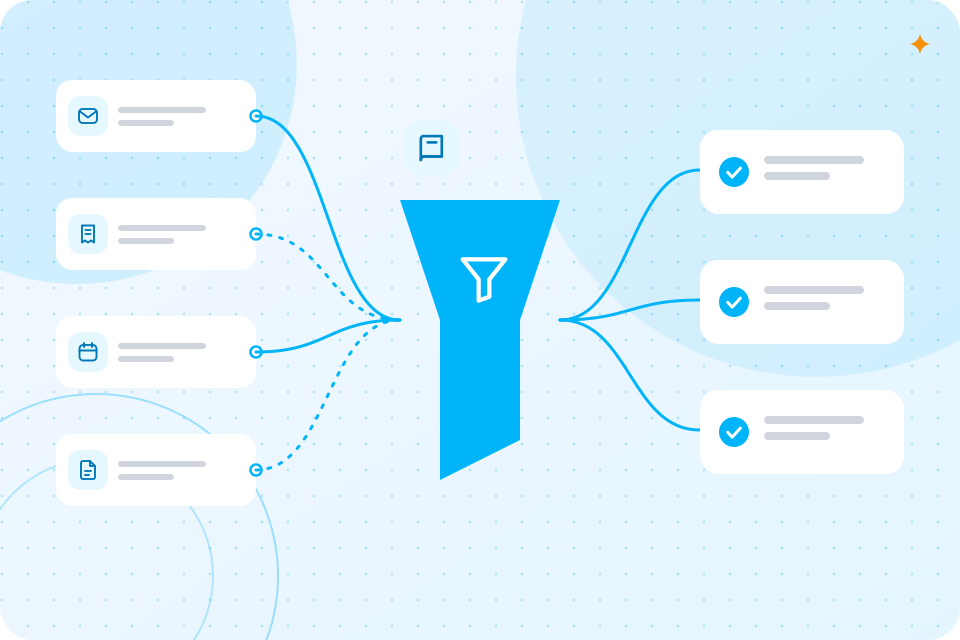
We sort every step into three groups: remove, automate or keep human. Only the middle group needs a build. See business process automation for what comes next.
Is it right for my team?
Yes, if your team is busy but cannot say where the hours go. It also fits when the same job is done differently by different people.
It is less useful for a single, well understood task. Then go straight to AI Automation. We tell you which case you are in on the call.
We use a one week time log kept by your team and short interviews. The log shows the real picture, task by task.
How do you find where the hours go?
People often guess wrong. The log catches the small jobs that add up, such as chasing a signature or keying a figure twice. We then draw the map of each role and mark the steps.
What does a worked example look like?
Here is a worked example with assumed figures. It is not a client result.
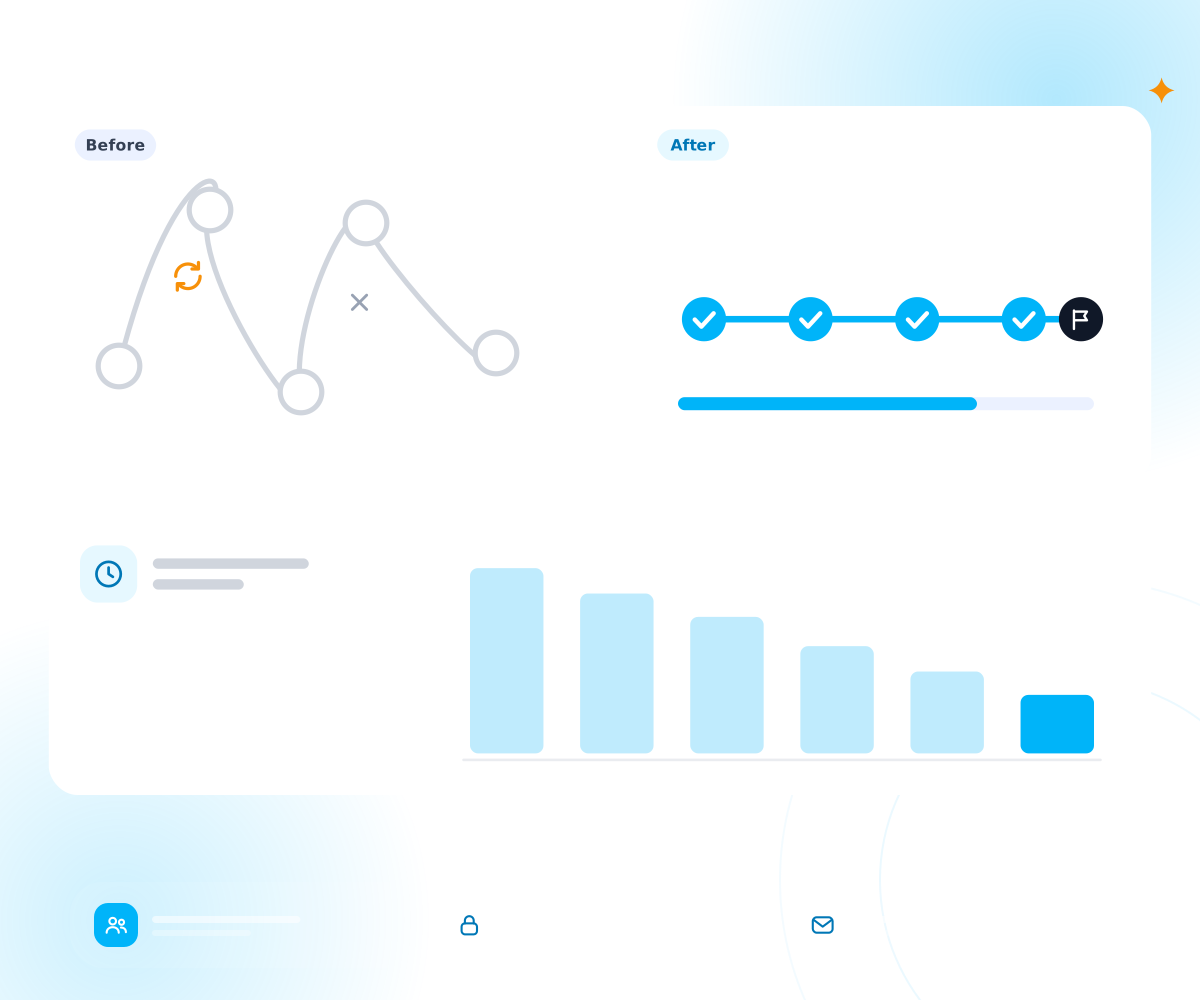
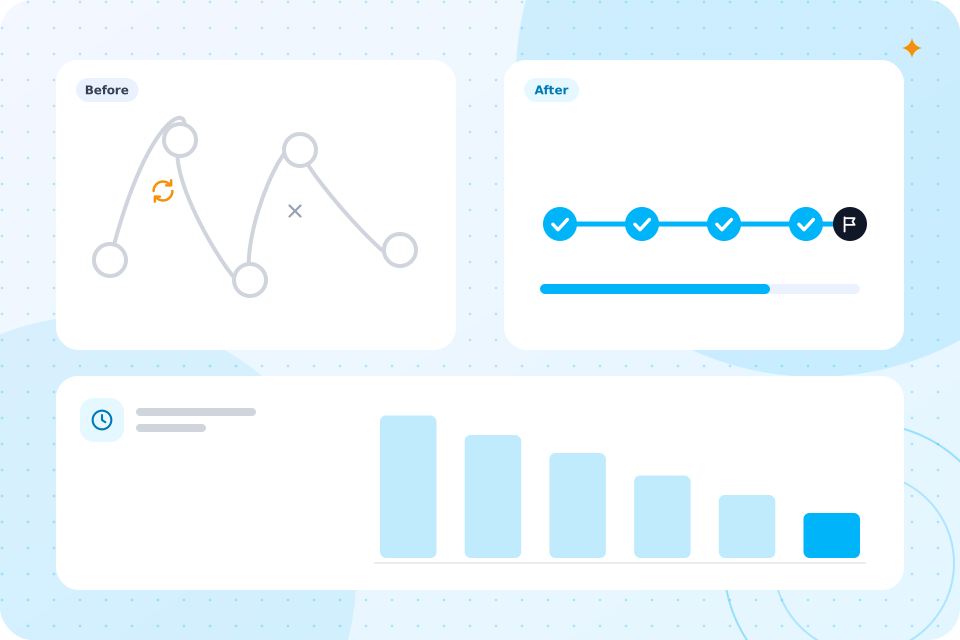
Say a team prepares a weekly report in 4 steps by 3 people, taking 6 hours in all. The log shows one step is a copy from a system that can export directly. Another is a check nobody reads. After removing both and automating the export, the job needs 2 hours. The team confirms the change by measuring again.
We can work through this with your own details on a free call.
What counts as back office automation?
It is any internal task that customers never see: filing, data entry, approvals, reports and reminders. It is often the quickest win.
Back office work is usually rule based and repeated, so it suits automation. It is also where optimising first pays most, because the waste has built up over years. See AI workflow automation for the tool links.
Factories with paper records can read how we approach AI for manufacturing.
We start with pen, paper and our free Workflow Automation Map. It turns a list of steps into a map and flags which steps to automate, assist or keep human.
Which tools do you use?
For the build we use Make, n8n, Zapier or Power Automate. For staff assistants we use Microsoft Copilot or ChatGPT. We pick what fits.
What about my people?
They help us, and they gain from it. They know where the time goes. We involve them in the log and the map, and we remove their dullest work first.
We automate tasks, not people. We also keep the sign off points human. A short briefing helps the team trust the result.
What does process optimisation cost, and how long does it take?
Price depends on the number of roles and processes. We scope it on a free call and quote in writing. It also forms the first step of the AI Booster, from £3,500 for up to 10 people.
A time log runs for one week. The map and the ranked list follow. Use the Staff Time and Cost Calculator to put pounds on the hours.
Start with the free 30 minute call. Tell us which team feels busiest and which jobs repeat.
What is the next step?
We will say whether you need optimisation first, a build, or an AI Booster programme.
Questions that come up
What is the difference between process optimisation and process automation?
Optimisation simplifies the work. Automation hands the remaining steps to software. We do the first, then the second.
Do you act as a process improvement consultant?
Yes. We map the work, remove waste and then build what is left.
How long does the time log last?
One week. That is enough to see the pattern without disrupting the team.
Will staff feel watched?
We explain that the log measures the work, not the person. People see the map first.
Can we do it ourselves?
Yes, with our free Workflow Automation Map. We help when you want a second pair of eyes.
What is workflow optimisation?
It is another name for the same thing, with a focus on how work moves between tools and people.
What happens on the call
- 1
You tell us which team feels busiest
- 2
We say where to measure first
- 3
You leave with a short list of what to automate first and a rough idea of cost
Prefer to talk first? Ring 07435 708864.
What you now know
- What process optimisation means
- Why optimise before automating
- Whether it fits your team
- How we find where the hours go
- What a worked example looks like
- What back office automation covers
- Which tools we use
- How your people are involved
- What it costs and how long it takes
- Your next step
Find where the hours go
The first call is free. We explain the one week time log and what it would show.