
Guide · AI Consultancy
The Complete Guide to AI Adoption for UK SMEs
AI adoption for a small or medium UK business does not need an in-house data science team, a six-figure budget, or a year-long transformation programme. It needs a clear-eyed look at where AI would genuinely help, a realistic first project, and a way to measure whether it worked. This guide walks through that process end to end, written for businesses without an existing AI team, not for the enterprise case studies most AI content is actually aimed at.

Key takeaways
- Successful AI adoption almost always starts with one well-chosen, bounded task, not a company-wide transformation.
- You do not need a data science team to adopt AI properly; most SMEs are better served buying or commissioning than hiring in-house from a standing start.
- The biggest cause of failed AI projects is not the technology, it is picking a task nobody actually cared about fixing.
- Governance and training are not optional extras, they are what stops an early win becoming a later liability.
Table of Contents
Set the right expectations
Why SME AI adoption is a different problem to enterprise AI
Almost everything written about AI adoption is aimed, implicitly, at large organisations: dedicated AI strategy teams, data science functions, six and seven-figure budgets, multi-year roadmaps. None of that is wrong for the businesses it is written for, and almost none of it is useful for a business with fifty, twenty, or five employees trying to work out what to actually do on Monday morning.
The good news is that AI adoption for a smaller business is, in most respects, simpler. You have fewer systems to integrate, fewer stakeholders to align, and usually a much clearer view of where the pain actually is, because the people who feel it are the people you talk to every day. The constraint is not complexity. It is capacity: nobody in the business has the time or specialist skill to run an AI project alongside their day job.
That reframes the real question. It is not “how do we build an AI strategy” but “who can help us pick the right first thing and actually get it working without derailing everyone’s normal job.” That is a solvable problem, and it is what the rest of this guide walks through.

The most important decision
Where to start: finding the right first project
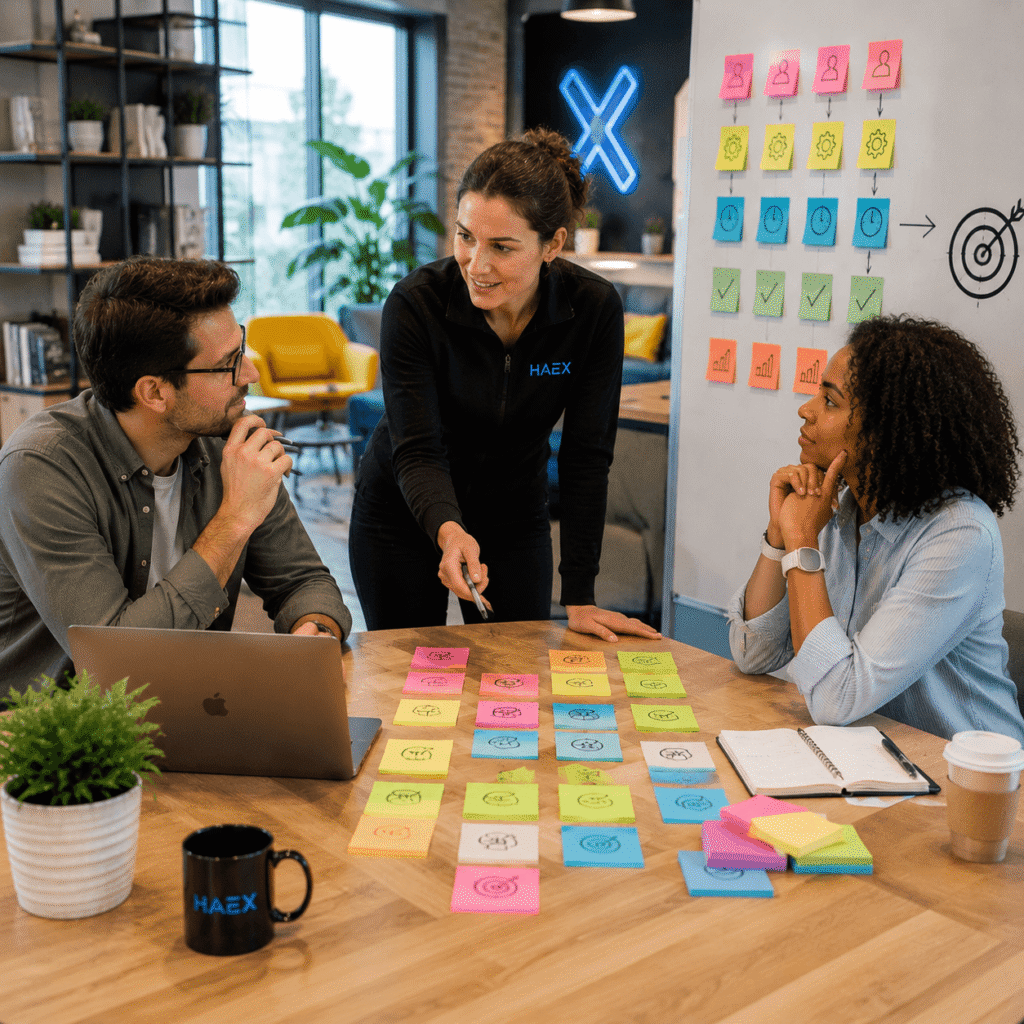
The single biggest determinant of whether an SME’s first AI project succeeds is not the technology chosen. It is whether the task chosen was worth doing in the first place. Pick well, and a modest project builds confidence and momentum. Pick badly, and even a technically successful build gets quietly abandoned because nobody needed it.
A good first candidate has three characteristics. It is painful and frequent: something that eats real time, regularly, that people would notice the absence of. It is bounded: a task with a clear start and end, not an open-ended judgement call. And it is measurable: you can tell, afterwards, whether it actually worked, in hours saved, errors reduced, or revenue affected.
The best way to find it is unglamorous: ask the people doing the work what they dread, what they do the same way every single time, and what they would love to never do again. That conversation, more than any strategy document, reliably surfaces the right first project.
The three routes
Build, buy, or hire: your three options

Buy an off-the-shelf tool
Fastest and cheapest for common, well-defined problems, a chatbot platform, a scheduling assistant. The trade-off is it fits your process to the tool, not the other way round.
Commission a custom build
Right when your problem is specific enough that no off-the-shelf tool fits well, or when the task is core enough to your business to be worth getting exactly right.

Hire an in-house specialist
Makes sense once you know AI is going to be an ongoing, growing part of the business, not for a single first project. Expensive and slow to get right from a standing start.
Most SMEs starting out are better served by buying or commissioning than hiring, because a single hire without existing AI expertise around them to guide their work is a high-risk, high-cost way to learn what you need.
The honest number
What it realistically costs
The honest answer is that it depends enormously on scope, and anyone giving you a single figure without asking what you need is guessing. What is true across the board is that a well-chosen first project, bounded, specific, tied to a real pain point, is a contained cost, not the six-figure transformation budget most AI content implies. Off-the-shelf tools can start from a modest monthly subscription. A focused custom build for a single well-defined task is a fixed, scoped project, not an open-ended engagement.
The costs that actually blow budgets are usually not the initial build. They are scope creep from starting too broad, and the ongoing running cost of AI models charging per use, which a good partner will estimate honestly before you commit rather than let you discover afterwards.

Learn from others' mistakes
The pitfalls that sink most SME AI projects

Starting too broad
“Let’s use AI across the business” has no first step. “Let’s stop typing customer details into three systems by hand” does.
No one accountable for the outcome
A project with no clear owner drifts. Someone needs to actually care whether it worked, not just whether it launched.
Skipping the data check
AI runs on your information. Assuming your data is ready without checking is the single most common cause of a stalled project.
No plan for adoption
A brilliant tool nobody uses achieves nothing. Training and a genuine reason to switch matter as much as the build itself.
Ignoring governance until later
Skipping policy and data-handling questions at the start means retrofitting them under pressure once something goes wrong.
Judging success on vibes
Without a measure agreed up front, “did it work” becomes a matter of opinion, and opinions are easy to talk out of a renewal.
Not an optional extra
Governance and training, from day one
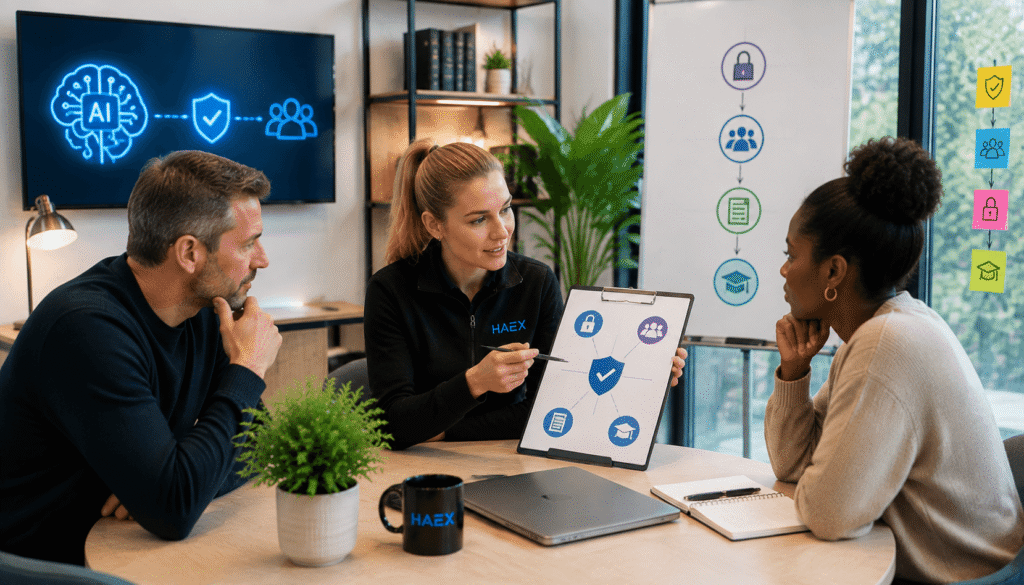
It is tempting, especially for a first small project, to treat governance and training as things to worry about later, once the tool has proven itself. This is a mistake that costs far more to fix afterwards than to build in from the start. Even a modest AI tool needs a clear answer to what data it can see, who is accountable if it gets something wrong, and how your team is expected to use it. A short written policy and a brief team session cost very little and prevent most of the problems that later require an expensive clean-up.
The businesses that scale AI adoption successfully past the first project are, almost without exception, the ones that treated this as part of the build rather than an afterthought.
Putting it together
A simple adoption roadmap
Find the real pain point
Ask your team what they dread doing repeatedly. That conversation is worth more than any strategy document.
- Step 1
Check your data is ready
A quick, honest look at whether the information the task needs actually exists and is usable.
- Step 2
Decide build, buy or hire
Match the route to the task’s specificity and how core it is to your business, not to what sounds most impressive.
- Step 3
Build the basics of governance
A short policy and a clear answer on data and accountability, before launch, not after.
- Step 4
Launch, train, measure
Get the team using it properly, and check against the measure you agreed at the start, honestly.
- Step 5
Frequently asked
Questions SMEs ask about AI adoption
No. Most SMEs are better served buying an off-the-shelf tool or commissioning a specific build for their first project than hiring in-house from a standing start. An in-house team makes more sense once AI is clearly going to be an ongoing, growing part of the business.
It depends heavily on scope, but a well-chosen, bounded first project is a contained cost, not the large transformation budget often implied by AI content aimed at enterprises. Off-the-shelf tools can start from a modest subscription; a focused custom build is a fixed, scoped project.
With a task that is painful and frequent, bounded, and measurable. The most reliable way to find it is asking your own team what they dread doing repeatedly. That single conversation surfaces the right first project more reliably than any strategy exercise.
Starting too broad, with no clear owner, and no way to measure whether it worked. The technology is rarely the reason a project fails; picking a task nobody actually needed fixed, or nobody being accountable for the outcome, is far more common.
Yes, even a short one. A brief policy covering what data the tool can see, who is accountable, and how the team should use it costs very little to write up front and prevents problems that are far more expensive to fix once the tool is already live.
Get your first project scoped properly
This guide gives you the general approach. A free consultation, or the AI Readiness Assessment, gets you a specific answer for your business: the right first project, and whether your data is ready for it.